Prologue
What this site is — and why
"AKTE BVB" is for lovers and haters of the Borussen alike. History becomes legend, legend becomes myth. And myth becomes cult — or a reason for eternal second-hand embarrassment, depending on the event.
The metamorphosis of the Westphalian coaching carousel. Champions League winners 1997, near-insolvency 2005, Klopp's miracle from 2008. Borussia Dortmund are Bayern's eternal challenger — with the Yellow Wall, 81,000 at the Signal Iduna Park and a passion that is unmatched. Hummels, Reus, Götze — the BVB develop stars and lose them to the competition. But the Südtribüne stands forever.
But this site goes beyond mere celebration or hatred. Akte BVB is structured in three parts: The Club Dossier tells the story — triumphs, tragedies, scandals, heroes and failures across 12 chapters. Match Intelligence delivers the live data a professional needs: squad, statistics, head-to-head, injuries, form. And Predictions brings it all together — with prediction markets.
Prediction markets are not gambling. In traditional sports betting, the masses lose — the money goes to the bookmaker who has built in his margin. Betting exchanges are similar: commissions on winnings, liquidity shortages and spread eat into returns. Prediction markets work fundamentally differently. There is no bookmaker who lets the house win. Instead, money flows from those who don't know to those who get it right — with risk management, portfolio diversification and disciplined capital deployment.
Akte BVB is part of Akte Bundesliga — the same concept for all 18 Bundesliga clubs. Each club gets its own dossier, its own intelligence, its own predictions. The big picture can be found at aktebundesliga.net.
Profile
Facts, figures and milestones
Profile – Facts, figures and milestones
Ballspielverein Borussia 09 e.V. Dortmund (Borussia Dortmund, BVB) is one of the most successful football clubs in Germany. Through the end of 2019, the club won eight German championships (most recently 2012) and four DFB-Pokals. Their last domestic cup triumph dates from 2017 (as of December 2019).
BVB became the first German European cup winner in 1966 and occupy second place in the Bundesliga all-time table by actual points won (as of December 2019). Since the 1976/77 season, Borussia Dortmund have played uninterrupted in the Bundesliga and have reached four further European finals since 1993, most recently in 2013.
The name "Borussia" derives from the old Latin word for Prussia. The Signal Iduna Park (Westfalenstadion), with a capacity of 81,360, is Germany's largest football-only stadium. The Südtribüne, accommodating 25,000 standing spectators, is Europe's largest terrace. For Champions League matches, the capacity is reduced to 66,000 (all-seater requirement).
With 155,244 members (as of December 1, 2018), Borussia Dortmund are Germany's third-largest sports club and the fifth-largest worldwide. Since November 1999, the first-team squad, reserve team and U19s have been outsourced into Borussia Dortmund GmbH & Co. Kommanditgesellschaft auf Aktien — a listed partnership limited by shares.
Fan friendships: Borussia Dortmund's fans, organised in more than 850 official fan clubs (as of November 2019), have maintained friendships since the 1970s with Rot-Weiß Essen, since the first UEFA Cup encounter in 1987 with Celtic Glasgow, and since 1976 with Hamburger SV. Looser friendships have existed since the 1990s with SC Freiburg.
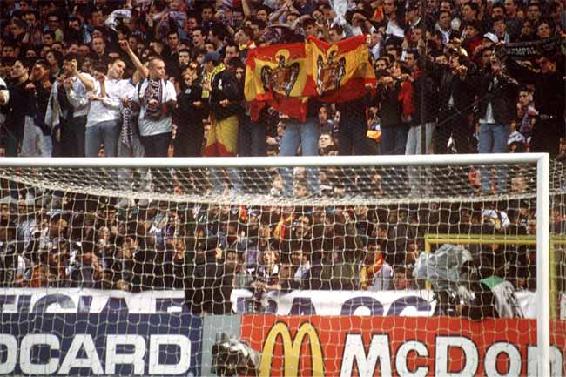
The greatest fan rivalry exists with FC Schalke 04 supporters. This animosity reaches its linguistic peak in the substitution of the rival's name with "Lüdenscheid-Nord" (for Dortmund) and "Herne-West" (for Schalke). Bayern München and VfL Bochum are also traditionally despised by the Dortmund faithful, and more recently RB Leipzig.
The club song "Wir halten fest und treu zusammen" is played less frequently at home matches. The official stadium anthem is "You'll Never Walk Alone." The fact that this anthem, introduced to football by Liverpool FC, was sung jointly before the clubs' first Europa League meeting in April 2016 brought BVB fans to tears worldwide.
For the 100th anniversary on December 19, 2009, the "Walk of Fame" was unveiled. The walkway tells the club history through 100 stars distributed across the city, spanning from the first official match (1911) through the first Westdeutsche Meisterschaft (1948), the back-to-back championships of 1956 and 1957, to the centenary celebration.
Good to Know
What few people know
Something new in the West. The BVB as clear number two in the Bundesliga behind Bayern München and alongside the record champions the only "global player" in German football? A fan magnet, a kind of substitute religion in black and yellow with 80,000 pilgrims at the Signal Iduna Park every other weekend? That was not always the case.
More precisely: it seemed unthinkable for a long time and only came about through several, sometimes spectacular, turning points in the club's history. And no, Borussia Dortmund were not a "tradition club" for a long time either. When clichés of Ruhr football were bandied about in the first decade after the war, it was Schalke 04 with their immortal heroes Ernst Kuzorra and Fritz Szepan who embodied the region.
What few people know today: a noteworthy cult around Borussia Dortmund only developed well after the turn of the millennium. The signs that something was changing in the football-breathing Ruhr after the devastating war were first detected by the Rhein-Ruhr-Zeitung in their football preview on May 18, 1947. "Schalke — or perhaps Borussia?" read the headline, "could it really be that Borussia Dortmund stand a chance in the final?" The disbelief of the experts was not unfounded. Borussia who? Until 1930, Borussia Dortmund were a third-division side, competing against the likes of SV Langendreer 04 or Sportfreunde Dortmund. During the turbulent 1920s, the club faced its first major financial crisis. Heinz Schwaben, director of the Dortmunder Union Brewery, personally guaranteed the BVB's debts. Under the leadership of August Lenz, Dortmund's first German international, the club finally reached the top-flight "Gauliga" in 1936. There, during the Nazi era, BVB had the reputation of a "fellow traveller" — the subscription champion Schalke 04, with their formidable modern short-passing game (the "Schalker Kreisel"), were simply unbeatable. Two runners-up finishes (1938 and 1942) remained BVB's greatest achievements.
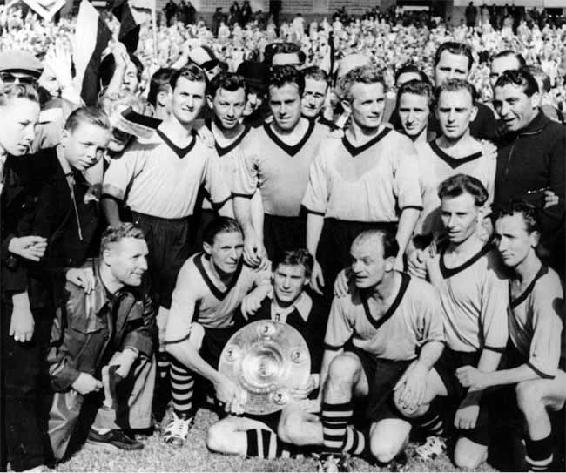
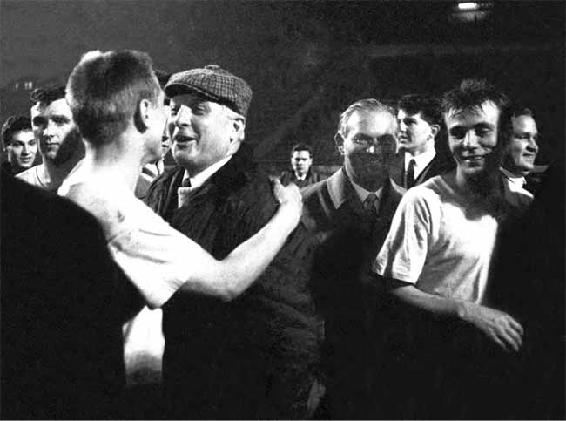
Then the "turn in the West," as Hans Dieter Baroth wrote in his 1989 book "Jungens, Euch gehört der Himmel — The History of the Oberliga West 1947-1963": "On Monday there are no newspapers. The Rhein-Ruhr-Zeitung reports on May 20, 1947: Schalke no longer Westphalian champions. (…) The great surprise in West German football is the 2:3 (1:0) of Schalke 04 in front of 30,000 spectators in Herne against Borussia Dortmund in the final for the Westphalian Football Championship." Schalke were so deeply wounded that they boycotted the award ceremony. In the years that followed, Borussia consolidated their newly won position at the top. Between 1947 and 1950, they won the West German championship four times in a row. The attempt to claim the national title failed in 1949 in the final against VfR Mannheim (for now), but Borussia Dortmund were on their way to becoming a German top side. Before the introduction of the Bundesliga (1963), they won the West German championship three more times and reached two further finals (1949 and 1961). Most importantly: in 1956 and 1957, the Black and Yellows won the national title with the same starting line-up in both finals — a first in German football. By the early 1960s, Borussia boasted a hungry, well-drilled squad featuring players like Hans "Til" Tilkowski, Helmut "Jockel" Bracht, Reinhold "Zange" Wosab, Wolfgang Paul, Alfred "Aki" Schmidt, Dieter "Hoppy" Kurrat, "Timo" Konietzka and Gerd Cyliax — a team that continued its success into the new Bundesliga era. In 1965, Dortmund won the DFB-Pokal and a year later, in Glasgow, became the first German club to win a European trophy, beating heavily favoured Liverpool 2-1 after extra time in the Cup Winners' Cup final. The first Bundesliga title was thrown away on the final stretch amid the celebrations following the Glasgow triumph, with BVB finishing second behind 1860 Munich. A turning point.
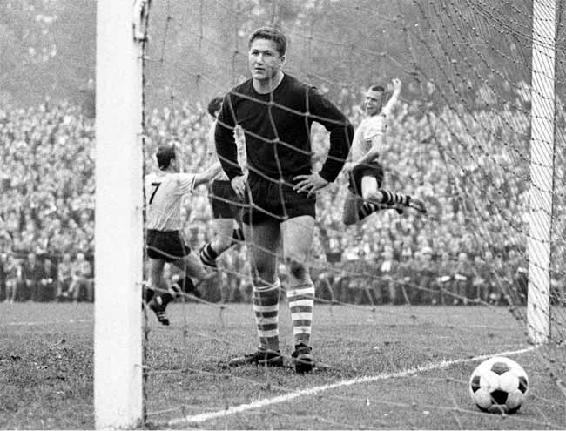
After a solid Bundesliga start, BVB became a "mid-table team" following the European Cup triumph: in the years after the victory over Liverpool and the runners-up finish, Dortmund only managed to challenge for the title once more in 1967 (third place). The ageing European Cup heroes could no longer improve, and in 1969 the outstanding striker Lothar Emmerich was sold after yet another financial squeeze. As early as 1963, the golden times in the "Pott" seemed to be fading: "The final season of the Oberliga West had a symbolic character," wrote Baroth, "the mine closures had begun, pit towers collapsed under demolition charges." From the late 1960s, Borussia Dortmund suffered under this "structural change," as politicians euphemistically called the downward spiral. Attendance fell from over 26,000 (1966/67) to 16,000 (1971/72), partly because of the Bundesliga match-fixing scandal — in which BVB were not even involved. In 1972, BVB were relegated from the Bundesliga for the first time — and, strapped for cash, scraped through in the Regionalliga and 2. Bundesliga. Particularly painful for die-hard Borussen: in 1974, Schalke came for a charity match…
What is also gladly overlooked today: Dortmund were a coaching carousel long before their relegation. After the departure of successful coach Willi "Fischken" Multhaup in 1966, Dortmund lost all continuity in the coaching position. Six coaches in six years came and went at the little Stadion an der Roten Erde before relegation struck in 1972. In the search for lost time, a total of eight coaches tried their luck at BVB from 1972 onwards. Only the Essen-born Otto Rehhagel had limited success, achieving promotion back to the Bundesliga in 1976. After Rehhagel's dismissal on April 30, 1978, a further 16 (!) coaches followed in the eight years before the fateful turning point of 1986. Big names like Udo Lattek, Karl-Heinz Feldkamp, Erich Ribbeck, Pal Csernai and Branko Zebec — in Dortmund, almost everyone got a turn! A low point was the 1983/84 season, when four coaches — Uli Maslo, Helmut Witte, Heinz-Dieter Tippenhauer and Horst Franz — greeted the journalists in succession. Tippenhauer was pushed back to his managerial position after just two matches, and the fans at the Westfalenstadion could barely be restrained from climbing the perimeter fences. It was the 34-year-old Reinhard Saftig who, by securing survival through the relegation play-offs in 1986, finally turned the tide.
And surprisingly: the fact that the Borussia ship reached calmer waters was thanks to a young lawyer who served as the "shadow man" on the 1984 emergency board under Dr. Reinhard Rauball, primarily overseeing the financial consolidation of the Ruhr club, which was 8.4 million Marks in debt. His name: Dr. Gerd Niebaum.
No other president at Borussia Dortmund embodies rise and fall like Dr. Gerd Niebaum, born October 23, 1948 in Lünen. Elected as Dr. Rauball's successor in 1986, he was seen as the great hope. That he brought in local sponsors and led the club into European competition as fourth-placed finishers just a year after near-relegation in 1986 was just the beginning of a new euphoria around Black and Yellow. The philosophy: build with players from the region! In 1986, Borussia surprisingly signed striker Frank Mill from Rhineland namesake Mönchengladbach. Together with Siegerland native Norbert "Nobby" Dickel, he formed a strike partnership that half the league envied. "Frankie" and "Nobby" fired BVB to the UEFA Cup quarter-finals in 1987 and the DFB-Pokal triumph in 1989 — the first trophy in 23 years. The reception for the "Heroes of Berlin" at Dortmund's Friedensplatz is a piece of city history. Another transfer masterstroke in the early Niebaum years was the surprise signing of Frankfurt's midfield jewel Andreas Möller.
Niebaum's greatest coup, however, was the hiring of the previously unknown Lörrach native Ottmar Hitzfeld in summer 1991. Hitzfeld and Niebaum became the new "Dynamic Duo" of German football. Their strategy: bring back mercenaries from the Lira paradise of Italy. This put them a step ahead of industry leader Bayern, who between 1991 and 1996 only managed to "grab" the championship trophy once. Bundesliga matches and European nights in Dortmund became events from 1992 onwards. The Westfalenstadion, built in 1974 for the World Cup in West Germany, was rechristened the "Mailänder Scala of German football" by Munich's Kaiser Franz Beckenbauer. The bigwigs from Munich, still playing in the draughty Olympiastadion, looked almost enviously towards Dortmund, where media frenzy and glamour in the style of "FC Hollywood" had (still) no place. Michael Meier, poached from Bayer Leverkusen as manager in 1989, turned Borussia Dortmund into a brand — and was named "Manager of the Year" by Kicker sports magazine in both 1992 and 1993, a fact rarely acknowledged today.
For the Haters
Embarrassing disasters and major defeats
0-12 against Borussia Mönchengladbach: Borussia Dortmund’s greatest footballing humiliation came on April 29, 1978. On Gladbach’s Bökelberg, BVB were systematically dismantled in what remains one of the most lopsided results in Bundesliga history. By half-time it was already 5-0, and coach Otto Knefler stood helpless on the touchline as Jupp Heynckes, Allan Simonsen and the Gladbach attack ran riot. The final whistle brought the kind of stunned silence that accompanies true humiliation. For the travelling BVB fans, it was a march of shame that no one who experienced it has ever forgotten.
1999/2000 season statistics: The star ensemble, reinforced for €30 million — including Nigerian Victor Ikpeba and Georgian Georgi Kinkladze — produced one of BVB’s most absurd seasons. The team lost 11 away games, won just seven of 34 matches, conceded 64 goals, and achieved a negative goal difference of minus 15. Coach Bernd Krauss was sacked after just eight matches and replaced by Udo Lattek, who at 64 years old was dragged out of retirement for one last, futile rescue mission. The squad, assembled at enormous expense, had the consistency of a house built on sand. It was a masterclass in how money alone cannot buy chemistry, spirit or tactical discipline.
Champions League negative record: In the 2017/18 Champions League, a desolate Borussia set a new German negative record in the competition. With just two points from six group matches against Real Madrid, Tottenham Hotspur and APOEL Nicosia, Peter Bosz's side scraped into the Europa League, where the embarrassment continued.
Relegation 1971/72: The relegation season saw numerous club-record negatives that still stand: 17th place (worst ever league finish), only five victories, 27 defeats, 38 goals scored and 76 conceded. The Bundesliga match-fixing scandal of 1971, in which BVB were not directly involved, had poisoned the atmosphere across German football. Attendance at the Westfalenstadion collapsed from over 26,000 to barely 16,000 as disillusioned fans turned their backs. For a club that had won the European Cup Winners’ Cup just six years earlier, the drop was a catastrophic fall from grace.
The weak final season under Jürgen Klopp 2014/15 — a feast for haters! With 17th place and 15 points, Dortmund produced their worst-ever Hinrunde. Under Klopp in 2008/09, the record number of draws — 14 — also prevented a better finish than sixth.
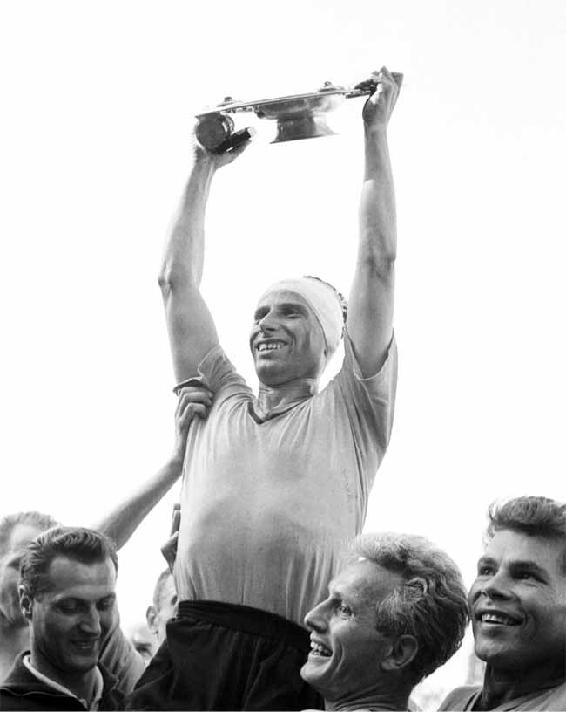
Against Paderborn: A 0-3 deficit against SC Paderborn on November 22, 2019 marked the biggest half-time deficit in BVB history since the era of electronic data. Paderborn, the smallest club in the Bundesliga by revenue and squad value, had been written off by everyone before kick-off. The first half was a horror show of defensive negligence and tactical naivety. That Dortmund eventually salvaged a 3-3 draw with a second-half comeback only partially disguised the embarrassment. Coach Lucien Favre’s tactical adjustments saved the result but the first 45 minutes entered the club’s catalogue of shame.
Derby of the century: A match they didn't even lose still goes down as a perceived mega-defeat in the BVB annals. On November 25, 2017, BVB led 4-0 at half-time in the Revierderby against Schalke, only for Naldo's stoppage-time header to make it 4-4 in the "derby of the century."
2007/08 season: The worst season since the introduction of the three-point rule in 1995. Under coach Thomas Doll, Dortmund finished 13th — a nadir for a club with Champions League ambitions. The squad, still weakened by the financial hangover of the Niebaum era, lacked quality in depth and character under pressure. Doll, hired as a motivator, found a squad that was beyond motivation. Only 10 wins all season, a goal difference of minus 7, and an average home attendance that dropped below 73,000 for the first time in years. It was into this wreckage that Jürgen Klopp arrived in 2008 — inheriting the worst starting position of any BVB coach in modern history.
77 minutes as German champions: Arch-rivals Schalke may call themselves four-minute champions since 2001, but what about Dortmund's 1992 title drama? On May 16, BVB were one of three teams level on points and took the lead from the ninth minute through Stephane Chapuisat's goal in Duisburg — holding the virtual title for 77 minutes before it slipped away.
For the Lovers
Key triumphs and major victories
Champions League winners 1997: The greatest triumph came under coach Ottmar Hitzfeld in 1997. On May 28, 1997, Borussia Dortmund beat Juventus Turin 3-1 (2-0) in the final at Munich's Olympiastadion to become the first German Champions League winners. Karl-Heinz Riedle scored twice and Lars Ricken sealed victory with a legendary chip.
The Double 2011/12: In the Bundesliga, the 2011/12 season — yielding the first "Double" in club history — represents the greatest domestic achievement. Under Jürgen Klopp, Borussia Dortmund defended the German championship in a long-distance duel with Bayern München and added the DFB-Pokal with a 5-2 demolition of Bayern in the Berlin final.
Robert Lewandowski: His enormous potential became apparent in 2011/12, when a BVB striker who had spent his first year mainly on the bench exploded into the most lethal goalscorer in German football. The Polish international scored 22 Bundesliga goals and 10 in the Champions League, terrorising defences with a combination of clinical finishing, intelligent movement and physical presence that defied his relatively slight frame. His four goals against Real Madrid in the 2013 Champions League semi-final — arguably the single greatest individual performance in the competition’s history — made him a global sensation. That he left for Bayern Munich in 2014 on a free transfer, having run down his contract, remains one of the most painful departures in Dortmund’s modern history.
Comeback 2001/02: The greatest title charge from behind came under coach Matthias Sammer in 2001/02. In the final three matchdays of the season, BVB overhauled Bayer Leverkusen in one of the most dramatic title races in Bundesliga history. Leverkusen, who had led for months and seemed destined for the treble, suffered a catastrophic collapse — losing the league, the DFB-Pokal final, and the Champions League final in the space of three weeks. Dortmund’s nerve held where Leverkusen’s cracked. The crucial 2-1 victory over Werder Bremen on the final day, secured by a Jan Koller goal and Jens Lehmann’s heroics in goal, sent the Westfalenstadion into raptures. It was Sammer’s vindication and Leverkusen’s eternal nightmare — "Vizekusen" was born that day, and the wound has never healed.
BVB as kingmakers: Schalke champions in Dortmund? "That can’t happen!" — not just the fans’ sentiment but the team’s too. On the final matchday of the 2006/07 season, Schalke needed BVB to lose against a direct rival in order to claim the championship. Dortmund, with nothing to play for in the table, found something far more powerful: Revierderby pride. The team delivered a performance fuelled by pure spite, ensuring that Schalke’s title dream died in the Westfalenstadion. It remains one of the sweetest non-victories in BVB history — proof that in the Ruhr, denying your neighbour success can feel as good as achieving your own.
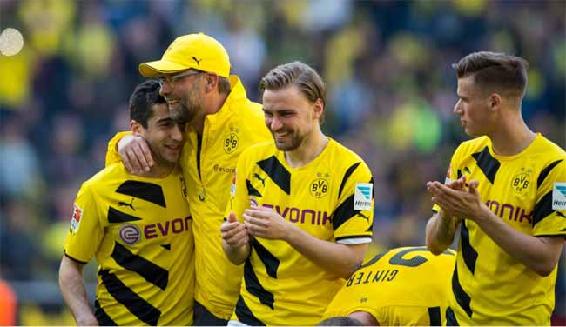
The "kindergarten" ambushes Bayern: "Championship-worthy lightning in Munich," was how the publisher DIE WERKSTATT described this unforgettable footballing evening of February 26, 2011. For the first time in nearly 20 years, Borussia won at Bayern — Klopp's young side announcing themselves as genuine title contenders.
11-1 against Bielefeld: In the 1982/83 season, Borussia Dortmund scored ten goals in one half during their record 11-1 victory over Arminia Bielefeld on November 3, 1982. After a modest 1-0 at half-time, the floodgates opened in a manner the Bundesliga has never seen since. Manfred Burgsmüller, the ageless goal machine from Essen, scored five to cement his Dortmund legend. The Westfalenstadion crowd watched in disbelief as Bielefeld’s defence simply ceased to function. Burgsmüller would go on to score 135 Bundesliga goals for BVB, a club record that stood for decades. His career trajectory was itself remarkable: he arrived at an age when most strikers contemplate retirement and proceeded to outperform players ten years his junior. The 11-1 remains Dortmund’s biggest ever Bundesliga win and one of the most extraordinary match results in the competition’s history.
Most Important Persons
The men who shaped the club
The title collector: The Dresden native arrived in Dortmund as a midfielder in 1993 after a completely failed spell at Inter Milan. Sammer, always a kind of playing coach, had fallen out with Inter coach Osvaldo Bagnoli — and found his true home at BVB, where he won the 1996 Ballon d'Or and led the club to the Champions League…
The title-maker: "In Dortmund, football isn't the most beautiful sideshow in the world. It's the main event!" declared the success coach. Known for his emotional touchline displays, "Kloppo" always polarised. Loud, passionate and full-blooded, he led BVB from mid-table mediocrity to back-to-back championships and a Champions League final…
The man for the big moments: No other player embodies BVB's successful youth development like the Dortmund native, born July 10, 1976. His breakthrough came as the 1994 German youth champion in Ottmar Hitzfeld's star-studded squad — and his Champions League final chip against Juventus became one of football's most iconic goals…
"Gib mich die Kirsche!" (Give me the cherry!): The striker, who passed away in 2003, scored 126 goals in 215 Bundesliga matches and was European Cup Winners' Cup top scorer in 1965/66 with 14 goals. Four of those came in the two semi-final legs — cementing his legend as BVB's first true superstar…
The loyal one: Midfielder, captain, the heart of BVB. His 463 Bundesliga appearances were all made for Dortmund — the club's all-time record. From 1981 to 1998, the man with the eternal number eight featured regularly, before seamlessly transitioning into the sporting director role that would define the modern club…
The beloved: Leonardo de Deus Santos arrived as a 20-year-old in Dortmund in 1998. The left-back won the German championship in 2002 and 2011 and reached the 2002 UEFA Cup final. Thanks to his closeness to the fans, Dedê remains one of the most popular players in club history…
Personae Non Gratae
The men fans love to hate
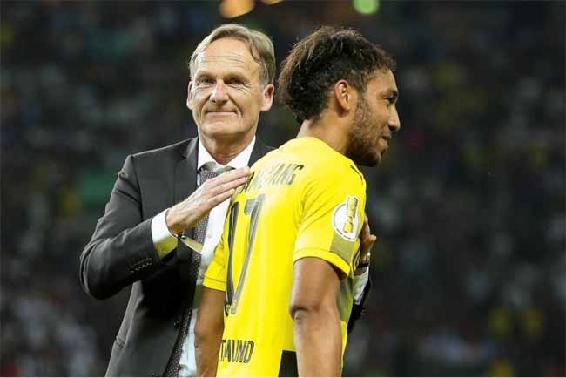
The show-off: BVB gave Aubameyang the most successful years of his football career. He scored 98 goals between 2013 and 2018 for the Black and Yellows, breaking through to world-star status. His transfer to Arsenal was overshadowed by repeated disciplinary issues and public provocations that tested the club's patience…
The megalomaniac: He led Borussia Dortmund to triumph and to the brink of bankruptcy. Under Niebaum's presidency, BVB won the DFB-Pokal 1989, three German championships (1995, 1996, 2002), the Champions League 1997 and the Intercontinental Cup 1997. Niebaum wanted more — and his hubris nearly destroyed the club…
The attacker: At 19:15 in the Dortmund district of Höchsten on April 11, 2017, three improvised explosive devices packed with metal pins detonated. They had been planted in a hedge to hit the passing Dortmund team bus. The players were on their way to the Champions League quarter-final against AS Monaco — an attack that shook world football…
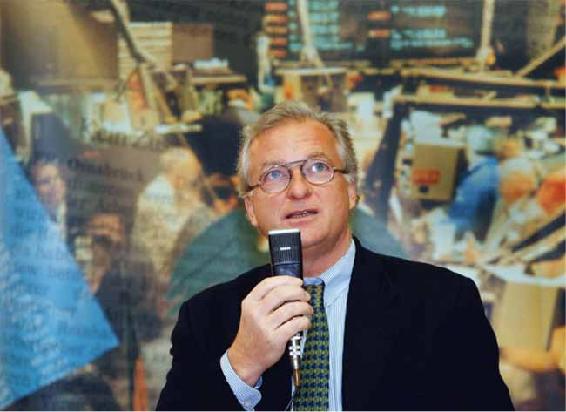
The speculator: At the height of Dortmund's financial crisis in summer 2004, a flamboyant helper appeared unexpectedly. The Hessian Harvard MBA graduate had made a fortune during the "Neuer Markt" era — and saw BVB as an opportunity. His involvement proved as colourful as it was controversial…
Tragic
Those who suffered misfortune
Flemming Povlsen — The "holiday European champion": Flemming Povlsen, who astonished the football world with late-call-up Denmark at the 1992 European Championship in Sweden, was supposed to become BVB’s star signing. Instead, a catastrophic knee injury sustained in training turned the dream transfer into a nightmare. Povlsen had arrived from Borussia Mönchengladbach as one of the most exciting strikers in European football, but his knee never recovered. He played just a handful of matches, each one a painful reminder of what might have been. The club had invested heavily in a player who would never deliver on his promise — not through any fault of his own, but through the cruel lottery of sporting injury. Povlsen’s case became a cautionary tale about the fragility of football careers and the enormous financial risk clubs take when betting on human bodies.
Otto Addo — Goal with a torn cruciate: Otto Addo enjoys cult status among BVB fans. This is primarily due to one goal and one injury — both on September 24, 2003. In the European tie against Austria Wien, Addo scored the 1-0 in the 37th minute despite having torn his cruciate ligament moments earlier. BVB won 2-1; Otto Addo never played again.
Wolfgang Feiersinger — Final from the stands: Feiersinger joined Borussia Dortmund for the 1996/97 season. The Austrian defender had been a reliable performer all campaign, contributing to the defensive solidity that carried BVB to the Champions League final against Juventus in Munich. Then came the cruellest blow: Feiersinger was omitted from the matchday squad for the final itself. He watched from the stands as his teammates lifted the biggest trophy in the club’s history — a moment of supreme joy for everyone except the man who had helped make it possible. The decision, taken by coach Ottmar Hitzfeld for tactical reasons, was professionally understandable but humanly devastating. Feiersinger never spoke publicly about his pain, but teammates later revealed that the experience haunted him. He had done everything asked of him, yet when the moment of glory arrived, he was excluded from it.
Rolf Rüßmann — An early death: Rüßmann was one of the players who represented both Borussia Dortmund (1980-1985) and Schalke 04 (1969-1973, 1974-1980). After his playing career, he worked as manager at Borussia Mönchengladbach and VfB Stuttgart. Rüßmann died on October 2, 2009 — a life cut short far too early.
KFC — Kevin’s Failed Club: From 2018, Kevin Großkreutz became the first 2014 World Cup winner to play in the 3. Liga. The Dortmund-born defender, who had been a key part of Klopp’s double-winning squad, saw his career unravel through a series of off-field incidents and diminishing form. Großkreutz was Dortmund through and through — born in the city, raised as a fan, tattooed with the club crest. His departure in 2015 began a downward spiral through Stuttgart, Galatasaray, and Darmstadt before he landed at third-division KFC Uerdingen. The sight of a World Cup winner playing in front of 3,000 spectators in Krefeld was football’s version of a Greek tragedy. Großkreutz himself confronted his decline with a mixture of defiance and dark humour, but for BVB fans who remembered his tearful celebrations after winning the Bundesliga, the trajectory was heartbreaking. He later returned to amateur football in Dortmund’s lower leagues, full circle back to where it all began.
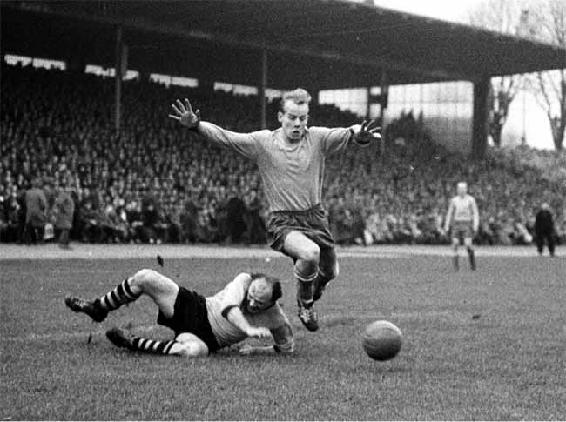
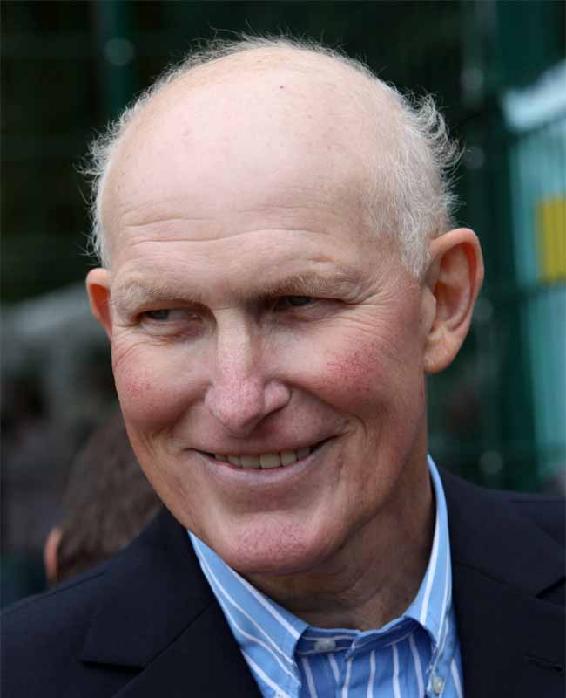
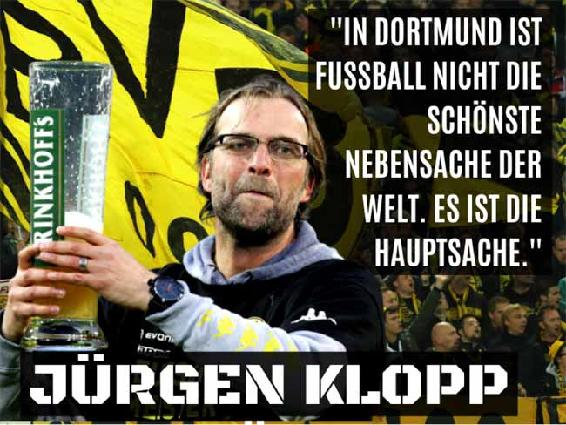
OMG — Oh My God
You can't be serious
BVB have the dearest enemies: "Schalke and Bayern saved Dortmund," say many BVB haters. And it's true, even if some in black and yellow only admit it through gritted teeth. The Blue and Whites from Schalke and the big shots from Munich are the "dearest enemies" of the Dortmund faithful…
BVB received a major boost from FC Schalke 04: In early 1974, the Ruhr club was languishing in the second-tier Regionalliga West. The opening match at the new Westfalenstadion on April 2, 1974 against rivals Schalke 04 drew around 50,000 spectators — and delivered BVB a financial windfall that kept them afloat.
Players’ wage sacrifice: The 1973/74 season could only be completed because the players agreed to forgo part of their salaries. BVB were so financially destitute after relegation that they could not meet their payroll obligations. The squad, aware that the club’s very existence was at stake, accepted deferred and reduced payments to keep the lights on. Several players took second jobs during the off-season. The solidarity shown by the dressing room in this period is rarely mentioned in the club’s official narratives, which prefer to focus on the triumphs. But it was this spirit of collective sacrifice — players choosing the club over their own financial security — that kept Borussia Dortmund alive during its darkest hour. Without that wage sacrifice, there might be no BVB today.
Dortmund and money — always a complicated affair! After the glorious 1997 Champions League triumph, many sceptics asked: how will Dortmund finance the next step? The answer, it turned out, was recklessly. President Niebaum and manager Meier embarked on a spending spree that dwarfed anything in Bundesliga history. Transfer fees, signing bonuses and wages spiralled out of control. Amoroso alone cost €25.5 million from Parma — a club record that seemed insane even at the time. Rosicky, Koller, Ewerthon, Frings, Metzelder: the squad read like a fantasy football team. But the revenue model depended on Champions League qualification, premium TV deals (via Kirch), and the stock market debut delivering ongoing returns. When all three pillars collapsed simultaneously between 2001 and 2003, the financial architecture disintegrated. The club that had spent like a Premier League side found itself unable to pay its utility bills. It was the most spectacular financial collapse in the history of German professional football.
Stock-market Borussia: On October 31, 2000, Borussia Dortmund became the first German football club to go public. With a share price of €11 at launch, the IPO on the Frankfurt Stock Exchange raised approximately €150 million. The mood was euphoric — analysts predicted the shares would soar as Dortmund monetised their brand, stadium and European success. The business plan was seductive: use the capital markets to fund a squad capable of sustained Champions League competition, generating revenue that would push the share price ever higher. On paper, it was a virtuous circle. In reality, it was a house of cards built on assumptions that would prove catastrophically wrong.
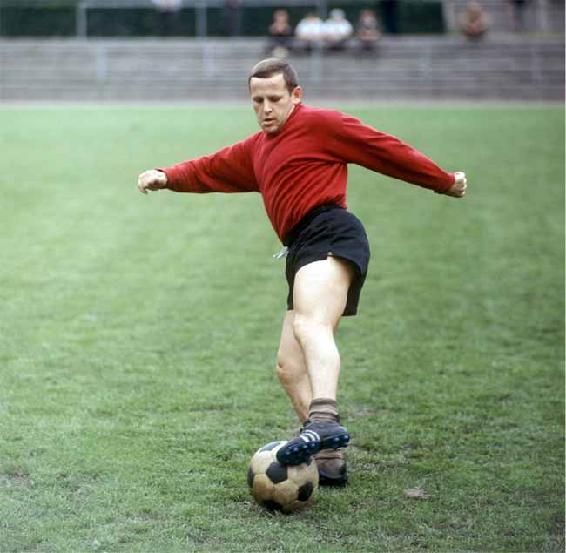
Borussia Dortmund and their ambitious president Dr. Gerd Niebaum wanted to capitalise on the boom. They commissioned a consultant study that concluded BVB could become a €1 billion enterprise within a decade. Niebaum, a lawyer by training who had never run a large commercial operation, believed the projections. The spending accelerated. A new training ground, squad investments running into nine figures, corporate hospitality infrastructure at the Westfalenstadion — everything was financed on the assumption that revenue growth would outpace expenditure. When the Kirch media group collapsed in 2002, taking guaranteed TV payments with it, the gap between costs and income became an abyss. Niebaum and Meier attempted to plug the hole through property deals and further borrowing, but by 2004 the debt had ballooned to over €200 million.
The doubters would be proven right. On the very first day, the stock closed with significant losses, trading at €9.52 instead of the €11 issue price. From there, the trajectory was almost entirely downward. By 2004, the share price had cratered below €1 — a loss of over 90% that wiped out the savings of thousands of small investors, many of them BVB fans who had bought shares as an act of faith rather than financial calculation. The IPO became a case study in what happens when sporting ambition collides with market reality. Business schools across Europe used Dortmund’s collapse as a teaching example. The share has since recovered and trades profitably, but the scars of the near-bankruptcy remain seared into the club’s institutional memory.
In 2004, BVB stood on the brink of insolvency after president Niebaum’s profligate spending. At the German national team’s training camp, Bayern Munich’s Karl-Heinz Rummenigge offered BVB a €2 million emergency loan — a gesture of solidarity (and shrewd politics) that still stings in Dortmund. The Westfalenstadion itself had been sold and leased back in a desperate attempt to generate cash. The restructuring that saved the club required humiliating concessions: players accepted deferred wages, a consortium of local Dortmund businesses stepped in to prevent bankruptcy, and Dr. Reinhard Rauball returned as president to clean up the mess — the same Rauball who had navigated the 1984 crisis. That BVB survived at all is considered one of the great escapes in German football history.
Without Schalke, no German champions: Sportingly, BVB's 1995 and 1996 championships would probably not have been possible without Ruhr rivals Schalke. In 1995, with Schalke in tenth and out of contention, they kept Dortmund in the race on matchday 32 by beating league leaders Werder Bremen 4-2. Bremen's Mario Basler exploded — while Dortmund crept closer to the title.
Fun Facts
Knowledge for blowhards, braggadocios and connoisseurs
Borussia Dortmund were the first German European cup winners (1966). Many know that. Here are fun facts about BVB with a "wow" factor.
Borussia Dortmund were somehow always strong at home: The first home defeat in the Oberliga West (pre-1963) didn't come until their third season, on April 2, 1950 — a 0-1 loss to eventual runners-up Preußen Dellbrück. In the opposing goal stood Fritz Herkenrath, future German international goalkeeper at the 1958 World Cup.
The first international: August Lenz (1910-1988) became BVB's first international in 1935. He won 14 caps for Germany through 1938. After his playing career, Lenz ran a pub at the Borsigplatz in Dortmund for 33 years. His face, alongside the city eagle with the BVB crest, is now the logo of the Dortmund ultra group The Unity.
Dortmund Lions: Since the IPO in 2000, Borussia Dortmund have been considered by many critics and "traditionalists" as the commercially most aggressive club in German football. But the nickname "Dortmund Lions" predates any stock exchange listing — it goes back to the club’s original crest, which featured a lion. The lion was replaced by the now-iconic "BVB 09" lettering in the 1970s, but the nickname persisted in certain fan circles. Today, the tension between tradition and commerce runs through every decision the club makes, from naming rights to transfer policy.
A home match at the Westfalenstadion without Borussia Dortmund? Impossible! Except it happened — on April 2, 1976. Not a Bundesliga match, admittedly, but a German national team friendly against the Soviet Union. The DFB chose Dortmund’s ground as the venue, and BVB fans found themselves watching other teams play on their sacred turf. The Soviet Union won 1-0, and the Dortmund faithful, deprived of their own team’s involvement, gave the visitors a notably warmer reception than the German national side received — a small act of rebellion that perfectly captures the BVB mentality: if it’s not our team, we’ll cheer for whoever irritates the establishment most.
Weak title defence: In 1966/67, Borussia Dortmund's defence of the European Cup Winners' Cup ended in round two: 1-2 and 0-0 against Glasgow Rangers. Bayern later avenged them by beating the Scots in the final (1-0 after extra time).
Glamoroso Amoroso: Borussia Dortmund paid a converted €25.5 million for Brazilian striker Marcio Amoroso from AC Parma in 2001 — a club-record transfer that epitomised the Niebaum era’s extravagance. In his first season, Amoroso delivered: 18 Bundesliga goals and the decisive contribution to the 2002 championship. But the love affair soured rapidly. Injuries, declining form, and a wage bill that the club could no longer sustain turned the dream signing into a financial albatross. By his second season, Amoroso was more often injured than fit. By his third, he was surplus to requirements at a club desperately trying to avoid insolvency. His transfer remains the symbol of BVB’s boom-and-bust decade — glamorous on arrival, ruinous in hindsight.
In a pub: BVB were founded on the fourth Sunday of Advent, 1909, by 18 people in the "Zum Wildschütz" tavern.
Bierussia: Not just the name of a famous BVB fan club from Lower Saxony! The name "Borussia" is said to derive from the Borussia brewery near the Borsigplatz. At least… that's the story in interested circles.
Special Moments
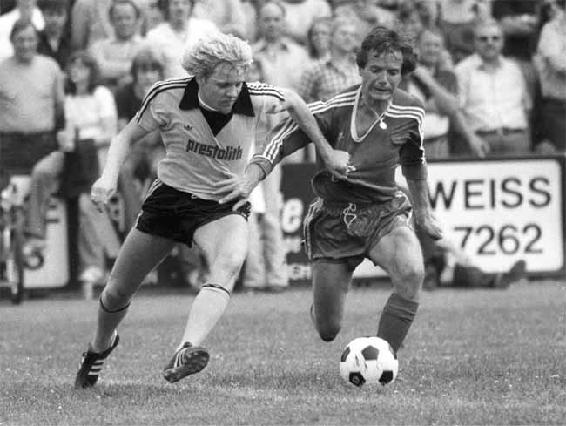
Alarm for Cobra Wegmann: BVB force their luck
Fortuna Köln — the club most fans in Germany probably only remember as the "life’s work" of entrepreneur Hans "Jean" Löring — were not a pushover. They had earned their place in the play-offs and they played with the desperation of a team that believed promotion was their destiny. In the first leg in Cologne, we had lost. The deficit was small but the psychological damage was significant. Coming back to Dortmund for the second leg, we knew that failure was not an option — not for the club, not for the city, and certainly not for the players who would have to live with the consequences. In Dortmund, relegation is not just a sporting result. It is an existential crisis.
Fortuna Köln — the club most fans in Germany probably only remember as the "life's work" of entrepreneur Hans "Jean" Löring († 2005) — had already destroyed a great opportunity for Dortmund in 1983, demolishing BVB 5-0 in the DFB-Pokal semi-final. And now? We should actually be grateful that we had this chance in the play-offs at all.
Nothing seemed to work in Dortmund any more. Not on the pitch, and certainly not financially. Emergency sales were needed, key players had left, and the squad was held together by willpower rather than quality. The training ground felt like a place of collective anxiety rather than preparation. And yet there was something about that 1986 squad — a stubbornness, a refusal to accept what everyone else considered inevitable — that gave me hope. Coach Reinhard Saftig, just 34 years old, had taken over a sinking ship and somehow kept it afloat through sheer force of personality. He was not a tactical genius but he understood what BVB meant to its people, and he transmitted that understanding to us.
We were also trailing against the Köln side in the second leg at half-time. 0-1. Our luck was that the play-offs had no away-goals rule yet, otherwise we'd have needed four goals to send Fortuna down. But scoring even three against this doggedly defending team on such a hot day was about as easy as having to drain the Möhnesee with a teaspoon.
At half-time, deathly silence in the dressing room. I looked Eike Immel deep in the eyes. "Kobra" — my nickname, because I once described myself as a striker "more venomous than the most venomous snake" — "Kobra," he eventually screamed at me, "I swear to you we're not going down!"
Fine! But how? Somehow we managed to turn the match around. With friendly assistance from referee Aaron Schmidthuber from Munich, who awarded us a penalty that was — let us say diplomatically — generous, we equalised. The Westfalenstadion erupted. At that moment, something shifted. The doubt that had hung over the squad for months evaporated, replaced by a wild, almost irrational belief that we could do this. The players who had looked defeated at half-time now played as if possessed. Every tackle was a statement, every run forward an act of defiance. The crowd, sensing the shift, raised the noise to a level I have never experienced before or since. Fortuna Köln, who had been so composed in the first half, began to wilt under the onslaught — the heat, the noise, the desperation of an entire city bearing down on them.
Then Marcel Raducanu headed in the 2-1. I retrieved the ball from the net after both goals to prevent any time-wasting from the Köln side. There were now 22 minutes left and we needed one more goal to force a third match.
That the second leg would be decided in the 90th minute was something I already knew. I'd told our coach Reinhard Saftig in a meeting three days earlier. Along with the demand to keep me on the pitch until the final whistle. Saftig listened. By bringing on Ingo Anderbrügge, who replaced Lothar Huber after 46 minutes, he also made the key substitution.
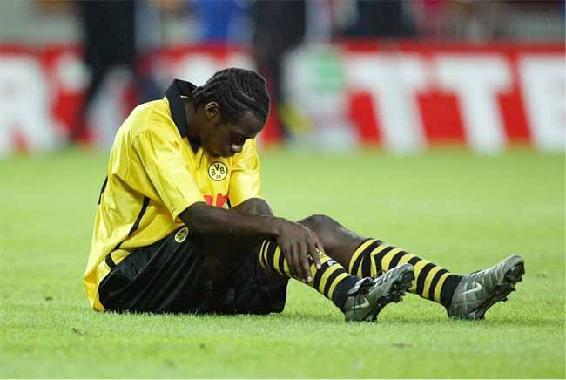
Injury time was already running. If it stayed 2-1, Borussia Dortmund would be relegated. The three-time German champions, the first German European cup winners of 1966, would face a bleak financial future. That a year later they would storm into the UEFA Cup with a 4-0 final-day win in Frankfurt, win the DFB-Pokal in striped socks in 1989, and conquer Europe with Ottmar Hitzfeld — all of that was unimaginable in this moment.
All of that would have been a humiliation for a BVB that had been searching for lost time for years. The club had everything: a great stadium, magnificent fans — but not yet a success formula. Things turned out differently. Fortunately. For me, for BVB, for the entire region.
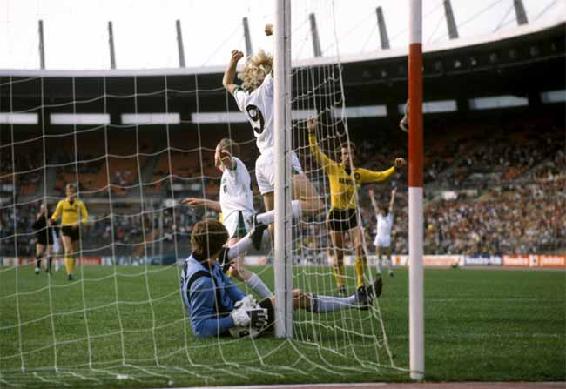
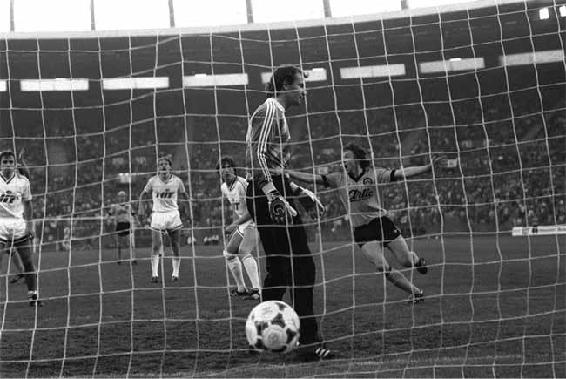
To this day, BVB fans approach me about my goal for 3-1, which secured us the decisive third match in Düsseldorf. The goal is still present in my mind. That film will probably run before my mind's eye forever. As if in a trance, I see a cross from the right by Bernd Storck, a double headed flick-on from Michael Zorc and Daniel Simmes…
I poked the ball somehow over the goal line, ran with it across the line. Daniel Simmes, leaping in the air in the photos of my goal — I hadn't seen him that fit all season as in that moment…
Wise Words
Quotes for eternity
"It's still nil-nil."
BVB captain Michael Zorc on ZDF's "Aktuelles Sportstudio," asked whether Borussia Dortmund had a chance against Juventus Turin in the 1993 UEFA Cup final"First we had no luck — and then bad luck came along too."
BVB striker and league philosopher Jürgen "Kobra" Wegmann, albeit while at Bayern München at the time"If I'm at the very top at the end, people can call me 'arsehole' for all I care."
BVB leader Matthias Sammer, when asked about his nickname "Motzki""Frank Mill has been washed with all the sewage water."
Norbert "Nobby" Dickel on his congenial BVB strike partner Frank "Fränkie" Mill"If the fans want emotions but you're offering chess on grass, one of you needs to find a new stadium."
Jürgen Klopp